Nielsen: 48% of Americans Watch Online Video
Consumers are now embracing all the various video platforms available to them, according to Nielsen’s quarterly report on media consumption. Roughly half (48%) of Americans now watch video online, compared to 10% for mobile and 97% for traditional TV.
Monthly time spent watching traditional TV in the second quarter of 2011 increased 1.9%, to 146 hours and 20 minutes, a year-over-year increase of 2 hours and 43 minutes of monthly viewing, according to the Nielsen Cross-Platform Report for Q2 2011.
By contrast, time spent watching video on the Internet was 4 hours and 26 minutes per month on average, up 15% from a year ago – but this amounts to just 3% of the total time in front of the TV. Read more
New Nielsen DMA Rankings
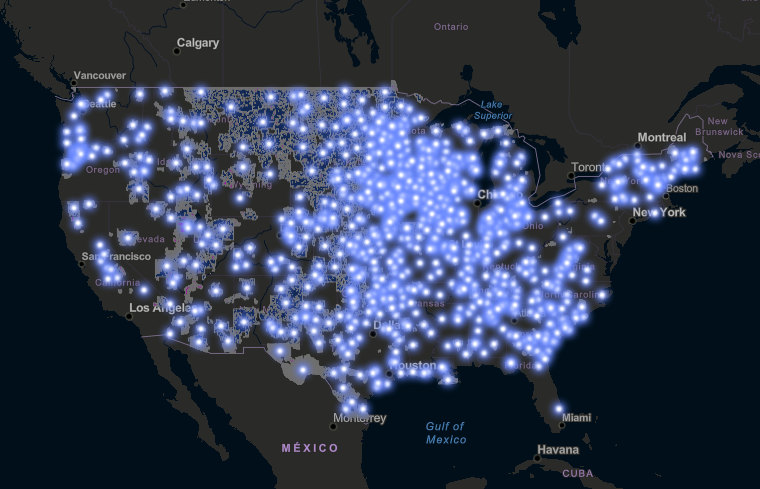
Nielsen, the audience measurement company, has released the 2011-2012 designated market areas (DMA) ranking estimate. Of special note is the drop in the number of television households across the country since this time last year.
The Nielsen estimate indicates that between 2010 and 2011 the number of television household dropped from 15.9 million to 14.6 million.
The ranking shows that the Washington, D.C., market moved up to the #8 slot, while Atlanta dropped to number 9. Tri-Counties in Southwest Virginia – Northeastern Tennessee moved to DMA 92, while Jackson, Tennessee, changed to DMA 176 from 182.
The estimates show slight shifting in various locations across the country, but the aggregate loss in total households may be the more discussed information. Does this represent “cord cutters” or is it something else?
Nielsen: Consumers Confused by Term ’4G’
You might have noticed that 4G is the new marketing buzz term, used by all four major mobile operators. T-Mobile refers to its HSPA+ build as the “largest 4G network,” while Sprint, AT&T and Verizon also made “4G” part of marketing for their respective Mobile WiMax, HSPA+ and LTE networks.
When it was first created the International Telecommunications Union (ITU) originally intended the term 4G to designate speeds of 100 Mbps downstream and other requirements. Facing pressure from carriers, however, just last month ITU relaxed its definition to include any substantial improvement in performance over 3G, allowing LTE, WiMAX and HSPA+ to all claim 4G status.
Given the confusion in the telecom industry it’s not really all that surprising that there is consumer confusion about what exactly 4G means and the benefits it provides. Read more
Average Smartphone User Consumes 298 MB per Month
Nielsen has closely examined the issue of smartphone data consumption in the United States, reviewing more than 60,000 bills from mobile customers each month. The analytics firm determined that the average user consumes 298 MB of data per month. This is a dramatic increase from the 90 MB per month recorded during the first quarter of 2009, a year-over-year increase of approximately 230%.
Nielsen also found that the heaviest users consume the most bandwidth, with 6% of users consuming half of all data used. At the opposite end of the spectrum, nearly 25% of smartphone users consume less than 1 MB a month.
Nielsen draws far-reaching conclusions from this research, Read more
Nielsen: Pay-TV Cord-Cutting is a ‘Myth’
There’s a growing belief that TV “cord cutting” – when consumers replace their pay-TV subscription in favor of online video services from providers like Netflix and Hulu – is gaining traction. In a (somewhat) surprising announcement, Nielsen says its new research “busts the myth” that mainstream consumers are turning to online solutions and abandoning cable subscriptions.
In fact, according to Nielsen, many consumers don’t see broadband as a replacement, but rather a complement to their existing pay-TV services. Nearly two-thirds of all U.S. households subscribed to both pay-TV and broadband as of January 2010, up from 61.6% in 2009 and 54.8% in 2008. Read more