


“We few, we happy few, we band of brothers,” encourages King Henry V in his pre-battle address in Shakespeare’s eponymously named play. Such words would not been uttered on Tech Express, the CES shuttle that runs a direct route from the Sands Expo to the Las Vegas Convention Center. “We few” could not have applied on an articulated bus whose driver quipped, “Keep moving to back, folks. We don’t run these buses until they are at capacity.”
Still, there are other links that can be drawn between the king of the Hundred Years War and the largest tech show on Earth (how about 23 million square feet of expo space?). Consider how technology enabled the few to defeat the many: English longbows, drawn by approximately 5,000 to 6,000 of Henry V’s archers, defeated a French army four-to-five times larger. In college football, we call that an upset.
In tech, we call it leveling the playing field.
In rural applications, we call it the democratization of spaces.
And rural broadband is the foundation of that change.
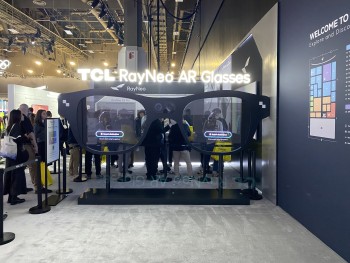
Let’s take AI-powered eyeglasses as a starting point. Google Glass was the “next big thing” at CES in 2014, but it never really took off. Fast forward a dozen years and black Wayfarer-style frames with tiny built-in cameras are all the rage. They record video, offer audio commentary, support facial recognition and enhance security by noticing anomalous indicators (imagine if the night watchman from “Corduroy” wore them…). They can also support health care applications. I tried a pair from Rokid and asked for nutritional information about a breakfast spread. The heads-up display on the lenses analyzed the menu (eggs, toast, pancakes, coffee, Danishes, etc.) and delivered a per-item calorie count.
Let’s give that power to doctors in rural spaces: “What am I looking at?” “What does this swollen ankle suggest?” “Does this skin lesion warrant a call to a specialist?” Not to replace health care providers, but rather (as we always say) to help them.
Rural applications can also rely on emerging Vision AI models – VLMs (Vision Language Models) or VLAs (Vision Language Action Models). If you have received a ticket for a moving violation that captured your license plate, think about how recognition technology (speed, conditions) will play when combined with agentic AI that not only identifies the object but also assesses the overall scene to provide autonomous recommendations – moving from basic traffic management and enforcement to assessments as to whether an event requires not only police intervention, but also fire or ambulance services as well. These platforms are also deployed for manufacturing and online retailing, enabling rapid autonomous adaptation to changing conditions or product needs. This is technology that enables the few to do the (complicated) work of the many.
These are AI-driven tools that enable rural health care, give rural manufacturers a critical edge, and boost efficiencies and capabilities for small business.
“We few, we happy few, we band of brothers” – not a weighty rallying cry before an historic battle, but a recognition of the power that small rural broadband providers bring to rural spaces.