


When it comes to advocacy for the rural broadband industry, indeed data is critical. Data shares the high cost of bringing connectivity to rural Americans and their communities and it tells the story of the economic and social impact of those investments in terms of jobs and services. It's one of the reasons why NTCA prioritizes encouraging members to complete our annual broadband survey. Those data points matter and are key for us to engage with policymakers through their brains. But I have long felt that there are two key organs to pay attention to when telling the story of rural America — the brain AND the heart. And capturing the heart is so compelling because you are talking about real people, real situations and painting the actual picture of broadband impacts through the eyes of those who benefit from those connections ... or from the dire perspective of those still unconnected.
That is why I appreciated Nneka Chiazor, CEO of the Public Affairs Council, joining me for the NTCA member webinar, “Leveraging Public Affairs Tools to Advance Rural Broadband Priorities” to talk about how to tell that story. Trust me; I'm about utilizing every single tool in the toolbox, and there was no better brain to pick on this one than Nneka’s. While she is relatively new in this role, I have known her for a few decades, as our paths first crossed working together at Verizon. I moved to NTCA, and she moved to Cox Communications, but I have long admired her work and her energy.
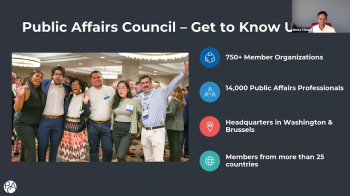
As rural broadband providers seek to enhance their advocacy efforts to meet the "noise" level here in Washington, D.C., it's increasingly important to leverage sophisticated public affairs strategies to advance policy priorities and achieve NTCA’s public affairs goals. For a public affairs and issue advocacy campaign — especially around something critical like Universal Service — to be impactful, a multi-faceted approach is necessary. We certainly see that in our work as your national association on the federal policy front. And given that we don't have the resources that large corporations have, we have learned to be creative on a shoestring and utilize our members’ grassroots reach. But campaigns of this importance need to be able to speak to elected officials, activate coalition partners and grassroots advocates to achieve success.
All of that is why Nneka and I dug deep on outreach strategies for key stakeholders, tactics in today’s social media world and ways to encourage our membership to continue to share their stories. I say it loud and often, when something as critical as the future of the Universal Service Fund (USF) is on the line, it's not the time to be humble, it’s time to tell your story of investment, creativity, innovation and customer service in the parts of the country that can be the most difficult and yet rewarding to serve.
Nneka shared the value that NTCA members bring in being the trusted messenger, the importance of going “hyper-local” and how owned media can be more impactful than purchased media. But the most impactful is partnering with an entrusted third party to carry a message. Find a “hometown” hero willing to help tell your story, find the “influencers” in your community and utilize testimonials, making it personal, showcase the people and business who benefit from your connectivity. Remember that stories matter and maybe host a fun event as a venue to share those stories and generate some energy for your brand. Have any breweries who are your customers?
Even as Nneka was talking about telling the story of what broadband connectivity would look like without USF, it struck me that we were ahead of the curve here at NTCA with our recently produced video for members to use (hint, hint – you can check it out here!) profiling just that. What happens when the farmer, teacher, small business owner cannot connect seamlessly to the rest of the world and economy? Our Broadband Built to Last campaign answers that question with fact sheets, videos, banner ads and newsletter articles intended for you to share, along with your own personal stories, for greater impact.
There was a lot to chew on, and I encourage anyone interested in hearing more of her pearls of wisdom to watch the replay of the webinar for those nuggets. And, as we head into our next stage of battles on the future of USF in an environment that still has a DOGE overhang and decreased focus on rural prosperity and support mechanisms, we need to make sure that we find ways to tie jobs, data and stories to those swing states that will politically matter enough, to both parties, to ensure that rural America does not get left behind.
I know that we all felt a huge collective sigh of relief after the Supreme Court case earlier this summer resulted in a positive outcome for the industry. But I would be remiss to not sound the alarm bells that the future for USF is far from certain and there is much work and engagement to be done to ensure that satellite service does not become the default answer for rural America, to communicate that throwing every carrier into the same model is not the answer and to stop what appears to be a race to the bottom for some broadband investment programs. Keeping our foot on the gas pedal is real and it’s an obligation for all of us.