
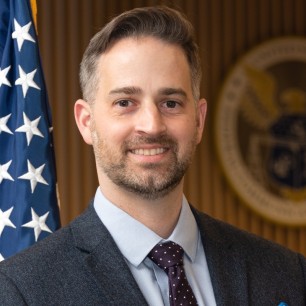
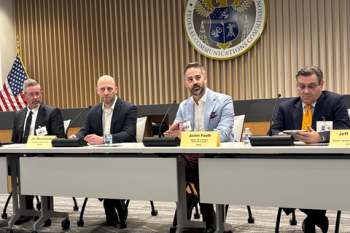
Last week, I was excited to return to my old FCC stomping grounds to spend two exciting days at the FCC's IP Transition Workshop. While I left with many takeaways, the most important reinforced something I've long believed: the communications industry broadly agrees that the transition to all-Internet Protocol (IP) networks is both inevitable and necessary. The challenge is balancing the need to transition quickly to achieve the benefits of IP interconnection while protecting the reliability and affordability upon which rural consumers rely.
The workshop brought together providers of all sizes, engineers, public interest advocates, and other stakeholders to discuss several pending commission proceedings related to IP interconnection, network modernization, intercarrier compensation and High-Cost Universal Service Fund (USF) reform. I had the opportunity to participate in one of the closing panels, but I also spent two days listening to conversations that dug deep into the variety of issues we must get right for the transition to be a success. The debate wasn't about whether the transition should happen, but about how to get it right.
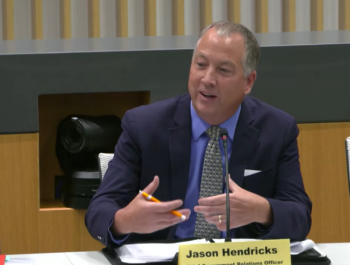
Throughout the workshop, NTCA members consistently emphasized that modernization cannot come at the expense of service quality. Jason Hendricks (Range; Forsyth, Mont.) and Jody Kalt (SDN Communications; Sioux Falls, S.D.) stressed that providers need a clear, reliable interconnection framework before retiring legacy arrangements. Other participants, including Brett Scorza (Sinch; Chicago, Ill.), discussed the opportunities that broader IP interconnection can create as networks continue to evolve. Together, those conversations reinforced a refrain heard throughout the workshop: the challenge is not simply replacing legacy systems, it is ensuring that the new framework delivers the same reliability, accountability and resiliency that consumers demand.
Another consistent message was that rural providers have already made significant investments in IP networks, but continued modernization depends on stable, predictable policies. Roger Nishi (Waitsfield and Champlain Valley Telecom; Waitsfield, Vt.) highlighted the investments providers have already made while emphasizing the importance of recovering those expenses and maintaining affordable service for rural consumers. Rick Darsey (Pelican Broadband; Collinston, La.) likewise stressed that providers must continue to have the resources needed to invest in and maintain their networks as legacy support mechanisms evolve. The discussion also featured perspectives from providers serving broader IP interconnection markets, including Jim Lennon (Sinch; Chicago, Ill.), who highlighted the need to balance modernization with practical implementation.
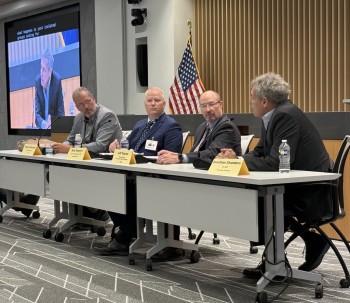
Universal service also was central to the discussion. Douglas Meredith (JSI), Nick Rogness (Golden West Telecommunications; Wall, S.D.) and Jeff Dupree (National Exchange Carrier Association; Morristown, N.J.) each underscored that predictable support mechanisms remain essential to deploying, maintaining and upgrading networks in high-cost areas.
I joined the workshop's closing panel to discuss the future of the FCC's legacy High-Cost and A-CAM support mechanisms. My message was straightforward: high-cost support has successfully enabled providers to build modern broadband networks in rural communities, but building those networks is only part of the challenge. Ongoing support remains necessary to operate, maintain and upgrade networks so rural consumers can continue to receive services reasonably comparable to those in urban America, even as other technologies like satellite-based communications may play a role in connecting unserved pockets of rural America in the future.
The workshop made clear that the industry’s conversations now center on ensuring that IP modernization is carried out thoughtfully, with policies that preserve reliability, encourage continued investment and recognize the unique realities of serving rural America. As the FCC considers its next steps, it should take to heart the important principle that echoed throughout the workshop: the transition to IP will be most successful and strengthen the communications networks and universal service commitments that rural communities depend on every day with a thoughtful approach that takes into consideration the equities of all participants in the marketplace.